

Top 5 series with great endings
Top 5 series with great endings is today’s prompt, and I think it’s an interesting one. Because there’s a difference between loving a series and loving how that series ends. Welcome back to Top 5 Tuesday!
We’ve all been there. You’ve invested hours (sometimes years) in a series, fallen hopelessly in love with the characters, developed theories about where everything is going, and then finally reached the last page.
Sometimes you close the book feeling utterly satisfied. Other times you stare at it in disbelief, wondering what on earth just happened. And occasionally you consider throwing it across the room.
Not that I’ve ever done that. Probably. 👀
But what makes a series ending great?
For me, it isn’t necessarily a happily-ever-after. (Although I do ARORE a good HEA.) But I also love an ambiguous ending. And I’m certainly not opposed to a little emotional devastation! What matters to me the most, is whether the ending feels earned. Whether the characters’ journeys make sense, the story delivers on its promises, and the conclusion feels like a natural consequence of everything that came before.
A great ending doesn’t have to give me everything I wanted. Sometimes it’s better when it doesn’t. And interestingly, these aren’t necessarily my five favourite series. They’re five series that knew exactly how to end.
Warning: Reader discretion is advised. We’re discussing series finales today, which means there are significant spoilers ahead. In each of the drop down sections, I’m going to talk about what actually happens at the end of these books, so if you haven’t finished them and want to remain unspoiled, consider this your opportunity to escape. Or just don’t click on the expand links of the series you don’t want to be spoiled on!

InLinkz reminder
A reminder to everyone before we begin: We’re using InLinkz! What this means is that you will be in charge of linking your own posts here! Rather than me scouring the web (or my spreadsheet) for them. I will likely be posting ahead of everyone because of *timezones*, so it should be relatively easy for everyone to drop links for your posts. Unless I screwed something up. (It happens more often than you think…)
Upcoming topics
Top 5 Tuesday topics for 2026 are here. If you have an idea for a topic, I am always open to hearing it! The date format is DD/MM/YY, and topics are listed by month. You can even click on tabs for previous years and check out past topics too.
Top 5 Tuesday was created by Shanah @ Bionic Book Worm, and is now being hosted here at Meeghan reads.
top 5 series with great endings
The Folk of the Air — Holly Black
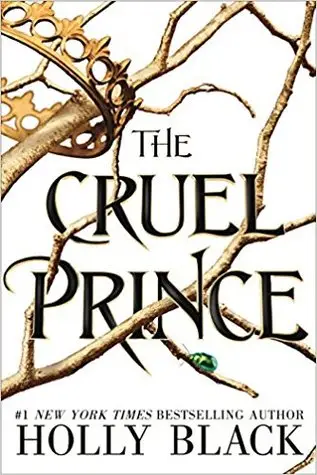


The Queen of Nothing spoilers
I have an enormous amount of affection for Jude Duarte. She’s ambitious, stubborn, ruthless and occasionally makes decisions that have me wanting to shake her. But she’s also a human girl trying to survive in a world where nearly everyone is stronger, faster and more powerful than she is.
And she’s absolutely determined that none of them will ever make her feel powerless again.
Throughout The Folk of the Air, Jude spends so much time manipulating the political machinery of Elfhame that she becomes something of a shadow puppeteer. She pulls strings, makes bargains, engineers outcomes and attempts to control people who could destroy her with very little effort. But despite everything she achieves, her position is precarious. She’s constantly fighting to maintain whatever power she’s managed to acquire.
And then there’s Cardan.
Their relationship is deliciously complicated, built on years of cruelty, pining, resentment, attraction and an almost spectacular inability to communicate like reasonable people. I love these idiots.
What makes The Queen of Nothing such a satisfying finale is that Jude’s political and emotional journeys finally come together.
For so long, she’s pursued power because she believes it’s the only way to protect herself and those she loves. If she can control the people around her, they can’t hurt her. If she can make herself indispensable, she can’t be discarded.
But by the end of the trilogy, Jude has something she never truly possessed before. Agency.
She no longer needs to exist in someone else’s shadow or manipulate her way into a position of influence. She’s earned a place in Elfhame on her own terms. And when she finally has the power to choose what she wants, she chooses Cardan.
Not because she’s been defeated, or because she’s surrendered her ambitions, but because she wants a future with him. She misses him. And she wants him back.
The resolution of Cardan’s transformation and the serpent prophecy brings the political and magical conflicts to a head, but for me, the real triumph is watching Jude recognise that choosing love doesn’t mean relinquishing power. She can have both.
And after everything these two have put each other through, watching them finally come together? Chef’s kiss.
Six of Crows — Leigh Bardugo
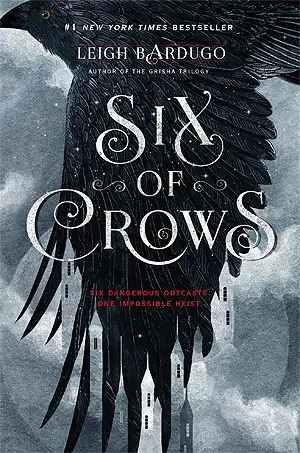

Crooked Kingdom spoilers
I need you to understand something about Crooked Kingdom. I have read this book multiple times. I know exactly what’s going to happen. And I still cry.
Every. Single. Time.
Because Leigh Bardugo apparently decided that giving us six wonderfully complicated, deeply traumatised characters wasn’t enough. She also needed to make us love them before absolutely destroying us.
And the worst part? I think it’s perfect.
What makes the ending of the Six of Crows duology so extraordinary is that Bardugo does not pretend the characters can simply walk away from everything they’ve experienced without consequences.
Kaz, Inej, Jesper, Wylan, Nina and Matthias have survived impossible odds, betrayed powerful enemies and repeatedly risked their lives for one another. They’ve become something resembling a family, although I suspect several of them would object strongly to that description.
But surviving the final confrontation doesn’t mean everyone gets the future they imagined. Matthias’s death is devastating. Not simply because we lose a character we’ve come to love, but because of what his death represents.
He has spent the duology confronting the beliefs he was raised with, questioning his hatred of Grisha and learning to see the world beyond the prejudices of his upbringing. His relationship with Nina is central to that transformation. They challenge each other, change each other and begin imagining a future that would once have been impossible.
And then that future is taken away.
There’s something particularly cruel about Matthias being killed by a young drüskelle who embodies the hatred Matthias himself has worked so hard to overcome. But that’s also why it works so beautifully. Tragically, but beautifully.
His death isn’t meaningless simply because it’s unfair. It demonstrates how deeply entrenched those prejudices remain, even when an individual manages to escape them.
Meanwhile, the other characters receive endings that feel appropriate to their journeys. Inej gains the means to pursue her own mission against slavers, while Kaz makes a gesture of love that acknowledges her freedom rather than attempting to possess her. Jesper and Wylan have a chance to build something together, and Nina carries her grief into the next chapter of her life. And the books.
Not everything is fixed. Not every wound is healed. But the characters have changed, and the futures available to them reflect those changes. I think that’s what makes this ending so powerful.
Bardugo doesn’t sacrifice the emotional truth of the story to give readers a universally happy conclusion. She allows the victories to matter while acknowledging the terrible price paid to achieve them.
And yes, I will continue rereading it. And yes, I will continue crying. Because I enjoy being emotionally devastated by fictional criminals.
The Infernal Devices — Cassandra Clare
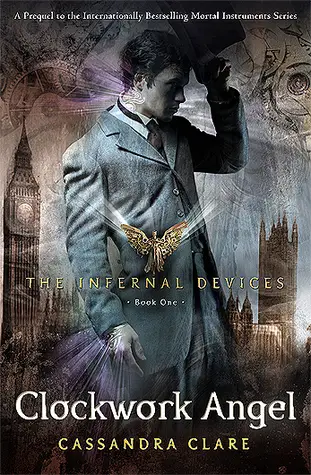


Clockwork Princess spoilers
There are love triangles, and then there’s Will, Jem and Tessa.
And I think The Infernal Devices has one of the most beautifully resolved romantic relationships I’ve ever encountered in fantasy. Because Cassandra Clare does something that many love triangles refuse to consider. She allows both relationships to matter.
Throughout the trilogy, Tessa’s relationships with Will and Jem are fundamentally different, but neither is presented as less genuine or meaningful than the other.
Will is passionate, fiercely loyal and hiding an enormous amount of pain behind his deliberately unpleasant behaviour. Jem is gentle, thoughtful and living with the knowledge that his illness is slowly killing him. And Tessa loves them both. Equally.
Usually, this is where a love triangle forces the protagonist to make a choice. One relationship becomes the great love story, while the other is relegated to a stepping stone on the way to the correct romantic ending.
But Clockwork Princess refuses to make things quite so simple.
Jem’s transformation into a Silent Brother changes the future that he and Tessa had imagined. But it was Jem’s choice, not Tessa’s.
Will and Tessa eventually build a life together, and it’s a beautiful one. They marry, have children and become part of the family legacy that readers of The Mortal Instruments already know. And I think that existing knowledge makes the ending even more poignant. We know Will’s descendants. We’ve seen the consequences of his life extending far beyond the events of this trilogy.
But Tessa is immortal. She will outlive Will, and the happiness they share doesn’t protect her from the grief of eventually losing him. Which is heartbreaking.
Except Clare doesn’t end Tessa’s story there.
When Jem is finally freed from his existence as a Silent Brother and becomes himself again, he and Tessa are given another chance at happiness.
And what I love about this resolution is that it doesn’t diminish Will.
Tessa’s love for Jem doesn’t erase the life she shared with Will, just as her marriage to Will never meant that her love for Jem was somehow less important. Both relationships are real. Both are significant. And both have a place in her life.
It’s a bittersweet ending because time and mortality still matter. Will doesn’t get to live forever, and Tessa must carry the grief of losing him. But she also gets to experience love again.
I think that’s an extraordinarily generous way to end a story about three people who love each other so deeply. Sometimes happiness doesn’t arrive in the form we expected. And sometimes choosing one future doesn’t mean every other possibility is lost forever.
The Raven Cycle — Maggie Stiefvater

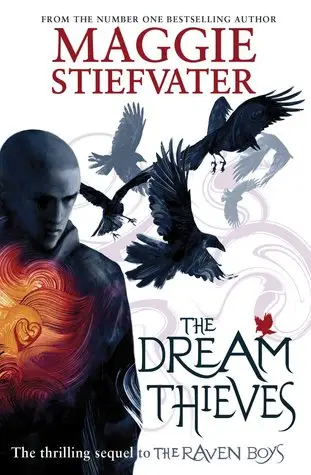


The Raven King spoilers
I think The Raven Cycle is a perfect example of an ending that doesn’t deliver what the characters were searching for, but still manages to feel exactly right.
For four books, Gansey and his friends have been searching for the sleeping Welsh king, Glendower. The quest is practically the foundation of the series.
Gansey believes Glendower is somewhere along the ley line, waiting to be awakened. And there’s the promise that whoever wakes him will receive a favour. It’s the sort of premise that creates an enormous expectation. Find the king. Wake the king. Receive the reward.
Except when they finally reach the end of their search, Glendower is not there. There is no sleeping king waiting to grant a wish.
After everything they’ve endured, the person they’ve spent years searching for isn’t there in the way they expected. And I love that.
Not because I enjoy watching characters have their hopes crushed (although, judging by some of my other choices today, perhaps I do), but because the revelation feels right for the story. The quest was never really about receiving a magical reward.
It was about the people who came together because of it, the relationships they formed and the ways they changed along the journey.
And while Glendower himself can’t deliver the ending Gansey imagined, the discovery of his daughter adds another layer to the mythology. The search hasn’t been meaningless. It simply leads somewhere different.
Then there’s the conclusion of the wider conflict between good and evil, and the way the story returns to the prophecy surrounding Gansey’s death.
From the beginning, we’ve known that Gansey is going to die. Blue has been told that she will kill her true love if she kisses him, and Gansey’s fate hangs over the entire series. When that moment finally arrives, it carries the weight of everything we’ve learned about these characters.
But it’s Noah’s role in the conclusion that makes the ending particularly bittersweet for me. Noah has been part of the story from the beginning, even though his relationship with time, death and the living world has always been different from everyone else’s. His final contribution brings his own story and Gansey’s together in a way that makes the series feel as though it’s come full circle.
There’s loss in that resolution, but there’s also something beautiful about the connections between these characters extending beyond the ordinary boundaries of life and death. And ultimately, that’s what I think makes The Raven King such a great finale.
It doesn’t reward the characters with the ending they originally expected. Instead, it reveals that the journey itself has become more important than the destination. Glendower was never going to solve all their problems. But searching for him changed their lives. And sometimes that’s enough.
The Aurora Cycle — Amie Kaufman and Jay Kristoff
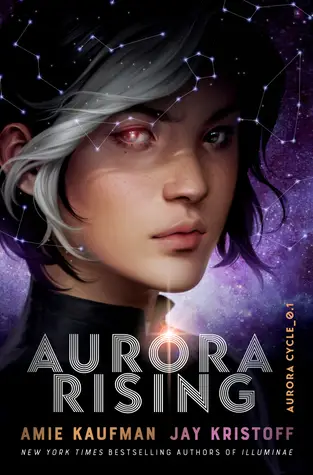
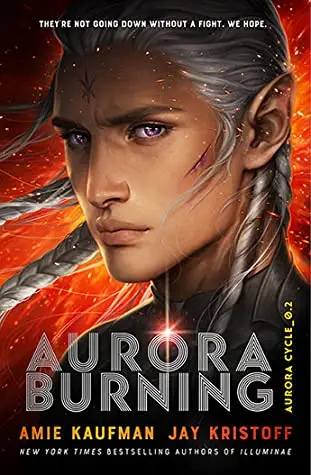

Aurora’s End spoilers
I want to begin this section with a confession. As a complete series, I actually prefer The Illuminae Files. But when we’re talking specifically about series endings? The Aurora Cycle wins. Every time.
And the reason is time travel. Well, time travel and the absolutely mind-bending questions it raises about destiny, free will and whether anyone has ever actually made a choice.
Because Aurora’s End doesn’t simply bring Squad 312’s story to a conclusion. It makes us reconsider the relationship between everything that’s happened and everything that’s still going to happen.
Across the trilogy, Squad 312 becomes caught up in a conflict with consequences far beyond anything they could have imagined when they first came together. What begins as a story about an unlikely group of misfits develops into something involving ancient powers, the fate of the galaxy and a threat that could fundamentally change existence itself.
And then the final book introduces time travel into the equation. Because apparently saving the galaxy wasn’t complicated enough.
The characters become separated across different points in time, and their attempts to understand what’s happening create a fascinating problem. If the future has already happened, can they change it? Or are their attempts to change it the very reason it happens in the first place?
This is where my brain starts to hurt. But, in the best possible way. Because time travel introduces a paradox into the traditional idea of character agency.
Most stories operate on the assumption that characters make choices, those choices have consequences and those consequences shape what happens next. But what if the consequences already exist? What if the characters are moving towards an outcome that has, in some sense, already been determined? Does that mean their decisions don’t matter? Or does the fact that they make those decisions mean they were always going to?
I love that Aurora’s End asks us to grapple with those questions while still delivering the emotional and narrative payoff of a trilogy about friendship, sacrifice and saving the galaxy. The ending doesn’t simply bring the different plotlines together. It makes the reader reconsider the nature of the journey itself. And I think that’s an incredibly satisfying way to conclude a series.
Because the best endings don’t necessarily answer every philosophical question they raise. Sometimes they leave you staring into space, trying to work out whether free will exists. Which is a perfectly reasonable reaction to finishing a YA science-fiction novel. Probably.
What makes a great series ending?
Looking back over these five series, I’ve realised that there’s something connecting all of them: choices.
Jude spends three books fighting for the power to make her own decisions, only to discover that love is something she can choose without surrendering her independence.
The characters in Six of Crows must live with the consequences of their choices, including the devastating ones they never wanted.
Tessa’s story challenges the assumption that choosing one person means every other possibility for happiness must disappear.
Gansey and his friends discover that the outcome they’ve been pursuing isn’t necessarily the one that gives their journey meaning.
And Squad 312 raises the rather alarming possibility that their choices might have been predetermined all along.
Five very different endings, but each one asks something about the relationship between our decisions and the lives we build around them. Which brings me back to my original question.
What makes a series ending great?
I don’t think it’s simply about tying up every loose end or giving readers exactly what they’ve been hoping for. A great ending understands what the story has been promising all along.
Sometimes that promise is fulfilled through a romantic reunion. Sometimes it’s through sacrifice, grief or the discovery that the thing everyone was searching for was never really the point. And sometimes it’s through a time-travel paradox that leaves me questioning the fundamental nature of existence.
But when an ending works, it makes everything that came before feel worthwhile. Even if I’m crying. Especially if I’m crying, apparently.
PARTICIPANTS
What series do you think have the best endings?
Do you prefer a happily-ever-after, a bittersweet conclusion or something that completely changes how you understand the story?
And have you ever loved a series but been disappointed by its final book? Or, like me with The Aurora Cycle, found that a brilliant ending elevated the entire experience?


meeghan
Hi!! I'm Meeghan 😊 I like books (surprise). I also like games (board, video and D&D), baking (mostly cakes) and travel. I live in Canberra, Australia with Husband and 3 black rescue kitties.


You May Also Like

Top 5 Tuesday 2019 wrap-up

Top 5 reading accessories