

Top 5 books with potions
Books with potions are surprisingly difficult to find when you start looking for actual potion-making rather than magic in general. Which is a little ridiculous, considering how many fantasy books I’ve read over the years. You’d think I’d have enough fictional witches, alchemists and questionable magical substances to fill a cauldron.
Welcome back to Top 5 Tuesday! We’re continuing our spooky October prompts, and this week we’re looking at books with potions.
But before we begin, I think we need to establish what actually counts as a potion for me.
For the purposes of today’s post, a potion is something that’s brewed, mixed or otherwise created, then consumed or applied to produce a particular effect. That includes traditional magical potions, but also elixirs, medicines, antidotes and poisons. If someone mixes a magical substance into a cake and another character eats it, that counts too. Likewise, a lotion that produces a magical effect when rubbed onto someone’s skin.
So, with my definition established, here are five books featuring potions, ranging from life-saving remedies to substances you should absolutely not accept from strangers.

InLinkz reminder
A reminder to everyone before we begin: We’re using InLinkz! What this means is that you will be in charge of linking your own posts here! Rather than me scouring the web (or my spreadsheet) for them. I will likely be posting ahead of everyone because of *timezones*, so it should be relatively easy for everyone to drop links for your posts. Unless I screwed something up. (It happens more often than you think…)
Upcoming topics
Top 5 Tuesday topics for 2026 are here. If you have an idea for a topic, I am always open to hearing it! The date format is DD/MM/YY, and topics are listed by month. You can even click on tabs for previous years and check out past topics too.
Top 5 Tuesday was created by Shanah @ Bionic Book Worm, and is now being hosted here at Meeghan reads.
top 5 books with potions
Poison Study — Maria V. Snyder

Starting with a book that takes the concept of potions in a rather sinister direction.
In Poison Study, Yelena is awaiting execution when she’s offered an alternative: become the Commander’s food taster. The position comes with a reasonably significant occupational hazard, given that her entire job involves eating things that someone might have poisoned.
And just in case she considers running away, Valek (Yelena’s new boss) administers Butterfly’s Dust, a poison that requires her to receive a daily antidote to survive. Which Valek brews himself.
It’s a particularly clever way of using poison in a fantasy novel because it creates an immediate imbalance of power. Yelena might have escaped the executioner’s noose, but her survival is still dependent on someone else’s decisions. Freedom, it turns out, is a rather complicated concept when someone controls your access to the antidote keeping you alive.
What I love about this example is that the potions don’t need to be magical to matter. Poisons and antidotes are chemistry with potentially catastrophic consequences. Their effectiveness comes from the ingredients, the preparation and the knowledge of the person administering them.
Of course, there’s also something wonderfully unsettling about a fantasy protagonist whose job description is effectively professional poison detector.
I think I’ll stick to reading books, thanks.
Six Scorched Roses — Carissa Broadbent
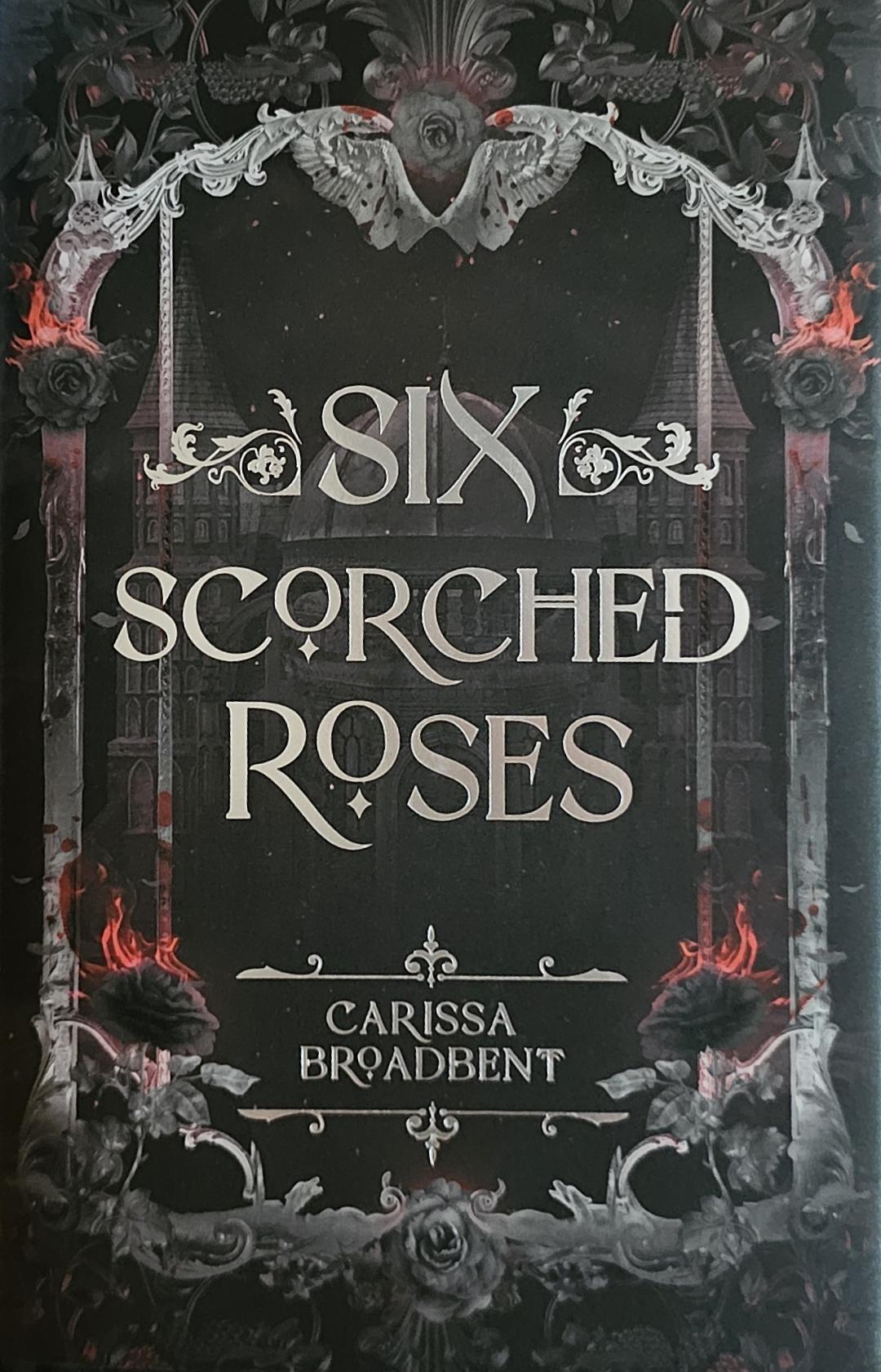
From poisons designed to control someone, and moving to antidotes created in the hope of saving someone.
In Six Scorched Roses, Lilith is desperate to find a cure for the mysterious illness threatening her sister, Mina, and the rest of the village. With time running out, she turns to Vale, a vampire whose blood might hold the key to developing an effective treatment.
And so begins a series of experiments involving vampire blood, medicinal preparations and a great deal of determination.
I love this approach to potion-making because it sits somewhere between science and magic. Lilith isn’t simply following a recipe from an ancient spellbook and hoping for the best. She’s trying to understand how something works, testing possibilities and attempting to create a solution to a problem that has already defeated others.
There’s a desperation underlying all that experimentation, too. This isn’t about brewing a love potion to attract someone’s attention or creating a convenient magical shortcut. Lilith is trying to save someone she loves, and every failed attempt carries an emotional cost.
Of course, the fact that her research involves a vampire makes things considerably more complicated. Because apparently developing experimental medicine wasn’t stressful enough without introducing a dangerously attractive paranormal being into the laboratory.
Honestly, fantasy scientists deserve hazard pay.
The Honey Witch — Sydney J. Shields
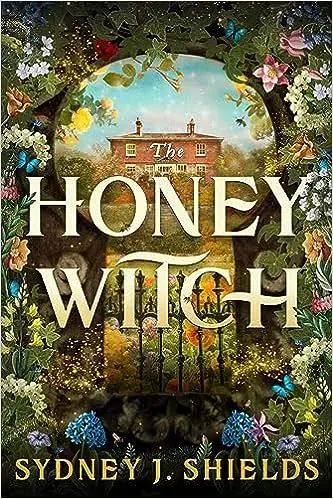
Now this is much closer to the cosy, traditional witchcraft I originally imagined when I wrote this week’s prompt.
In The Honey Witch, Marigold discovers that she’s inherited magical abilities from her grandmother and begins learning what it means to become a Honey Witch.
Part of that work involves making potions and remedies for the villagers, using honey produced by her bees as the base for her magical concoctions.
And I absolutely adore the idea of honey-based magic. There’s something inherently practical about a witch who uses ingredients from her own garden and beehives to help the people around her. Rather than magic existing solely for dramatic battles or enormous displays of power, it’s woven into everyday life. It reminds me of the practical witchcraft (or headology) we see in Terry Pratchett’s Discworld books. People need assistance, and Marigold has the knowledge and ingredients to provide it. Problem solved.
I also like the idea that the properties of honey lend themselves so naturally to potion-making. Honey has a long history of being used in food preservation and traditional remedies, as well as having a place in Greek mythological stories, so it feels like a believable foundation for a magical practice.
It’s the sort of witchcraft that makes me want to live in a little cottage surrounded by flowers, books and bees.
Although, realistically, I’d probably spend all my time reading inside, terrified of getting stung, while the bees did the actual work. And then I’d have to apologise to the villagers because their potions were late.
Circe — Madeline Miller
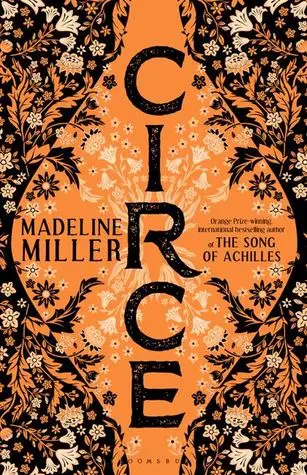
If we’re discussing potions, I don’t think we can ignore one of the most famous witches in Greek mythology.
In Circe, Madeline Miller reimagines the life of the enchantress best known for transforming Odysseus’s men into pigs. But Circe’s magic isn’t simply something she’s born knowing how to use. She develops her skills through experimentation, learning the properties of plants and discovering what she can accomplish through her own efforts.
Her witchcraft involves pharmaka — preparations made using herbs, roots and other natural ingredients that can produce extraordinary effects. Including, of course, the aforementioned pigs.
And really, there’s something rather satisfying about a witch who can respond to terrible behaviour by turning the offenders into livestock. I’m not saying it’s an appropriate response. I’m just saying that some people make it very difficult to resist the temptation.
What makes Circe particularly interesting to me is the relationship between knowledge and power. Her abilities don’t operate quite like the innate magic we see in so many fantasy novels. Instead, there’s an element of craft involved: learning which ingredients to use, understanding their effects and developing the skill to transform ordinary substances into something extraordinary.
It’s a reminder that the traditional witch wasn’t necessarily someone waving a wand around and shouting spells. She was often imagined as someone with knowledge that other people didn’t possess, particularly about the natural world.
And when that knowledge can transform you, it’s probably wise to be polite when someone offers you a drink.
The School for Good and Evil — Soman Chainani

Our final book is a slight departure from the others because it’s still sitting on my TBR.
The School for Good and Evil follows Sophie and Agatha, two girls who find themselves transported to a school where children are trained to become fairy-tale heroes and villains.
Which sounds like exactly the sort of educational institution where potion-making ought to be on the curriculum.
The premise promises lessons in the magical arts, including potion-making at the School for Evil. And honestly, where else would you expect to find beautification and uglification potions but in a school training the next generation of fairy-tale villains?
I have a particular fondness for the idea of potion-making as a school subject. Give me shelves of mysterious ingredients, handwritten recipes, bubbling cauldrons and students desperately trying to work out whether the instructions meant you have to stir three times clockwise or anticlockwise.
Preferably with someone explaining what happens when you get it wrong. Because let’s be reasonable: if a chemistry experiment can go badly in an ordinary classroom, imagine the possibilities when the ingredients are magical.
I haven’t read this one yet, so I can’t tell you which particular potions appear or how important they are to the story. But I’m hoping it delivers the sort of traditional potion-making that first came to mind when I saw this prompt.
And perhaps it’ll finally convince me to move it off the TBR and onto my currently-reading pile. Although given the size of that pile, I wouldn’t hold my breath.
What’s brewing on your bookshelf?
I thought finding five books with potions would be easy. After all, fantasy is full of witches, magical ingredients and people making extremely questionable decisions involving mysterious liquids.
Apparently, though, there’s a difference between remembering that a book contains magic and remembering whether anyone actually brewed something. With or without a cauldron.
What I really enjoyed about this week’s topic was discovering how differently potions can function within a story. Sometimes they’re used to threaten or control people. Sometimes they’re the only hope of saving someone. And sometimes they’re simply part of a witch’s everyday work, helping her community with the skills she’s spent years developing.
Then, occasionally, they’re used to turn people into pigs. Which is a very specific form of conflict resolution.
PARTICIPANTS
What are your favourite books with potions?

meeghan
Hi!! I'm Meeghan 😊 I like books (surprise). I also like games (board, video and D&D), baking (mostly cakes) and travel. I live in Canberra, Australia with Husband and 3 black rescue kitties.

You May Also Like

Top 5 Tuesday topics: October-December 2023

Top 5 books about orphans
