

Top 5 books with curses
Welcome back to Top 5 Tuesday! We’re finishing October’s spooky prompts with five books with curses, and some rather interesting questions about whether curses are necessarily evil.
Books with curses are everywhere in fantasy, but the more I thought about them (while drafting this week’s post), the more I realised that curses aren’t necessarily evil. Which seems somewhat counterintuitive, given that most of us associate curses with wicked witches, unfortunate princesses and people who really should have been more polite to mysterious strangers.
After spending an unreasonable amount of time last week establishing what actually constitutes a potion, I thought we should probably do the same for curses. Because apparently I can’t just pick five books with magic in them and call it a day. Who knew.
For today’s post, I’m defining a curse as a magical condition deliberately imposed upon a person, creature, object or place, generally with lasting consequences. It might be intended as punishment, protection, manipulation or even a misguided attempt to help.
That last part is important.
Because while curses are traditionally associated with villains, the intention behind them isn’t always malicious. Sometimes the person casting the curse genuinely believes they’re doing the right thing. Sometimes they actually are doing the right thing. And sometimes the difference between a blessing and a curse depends entirely on who’s experiencing it.
So, here are five books that explore curses in very different ways. We’ve got traditional fairy tales, protective enchantments, magical sports, tyrannical fae queens and an entire society built around the ability to curse people.
Honestly, it’s a wonder anyone in fantasy books trusts anyone else.

InLinkz reminder
A reminder to everyone before we begin: We’re using InLinkz! What this means is that you will be in charge of linking your own posts here! Rather than me scouring the web (or my spreadsheet) for them. I will likely be posting ahead of everyone because of *timezones*, so it should be relatively easy for everyone to drop links for your posts. Unless I screwed something up. (It happens more often than you think…)
Upcoming topics
Top 5 Tuesday topics for 2026 are here. If you have an idea for a topic, I am always open to hearing it! The date format is DD/MM/YY, and topics are listed by month. You can even click on tabs for previous years and check out past topics too.
Top 5 Tuesday was created by Shanah @ Bionic Book Worm, and is now being hosted here at Meeghan reads.
top 5 books with curses
Frogkisser! — Garth Nix
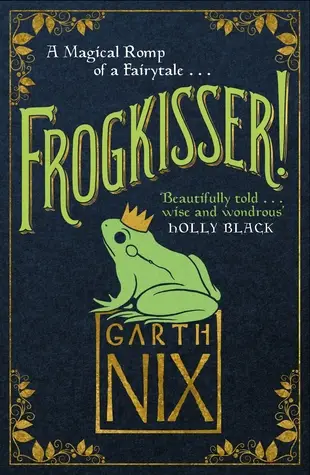
Let’s begin with a book that takes one of the oldest fairy-tale traditions and asks a very important question: what if the princess is thoroughly sick of dealing with everyone else’s magical problems?
In Frogkisser!, Princess Anya has the rather unfortunate ability to break curses through magic-assisted kisses.
Which sounds charming until you consider the practical implications.
Imagine discovering that you possess an extremely rare magical talent, only to learn that it involves kissing people who have been transformed into frogs. And presumably other creatures, depending on how creative the local curse-casters have been.
I’m not entirely convinced this is a gift.
The story begins because of curses, and Anya’s ability to undo them becomes central to her adventures. Rather than being the unfortunate princess waiting for someone to rescue her, she’s the person who has to go around fixing magical disasters.
What I love about that premise is the way it reverses the traditional fairy-tale dynamic.
We’re all familiar with the idea of true love’s kiss breaking an enchantment. It’s practically a contractual obligation in certain corners of fairy-tale literature. But what happens when breaking curses becomes a responsibility rather than a romantic gesture? And what if it’s a magic kiss, rather than true love’s kiss?
Anya’s ability gives her power, certainly, but it also creates expectations. Other people have problems, and she’s someone who might be able to solve them. And there’s a difference between having the ability to help and being obligated to help everyone who asks.
I also appreciate a fairy-tale heroine who doesn’t need to wait around for someone else to sort out the plot. If there’s a curse to break, Anya is going to have to do it herself.
Even if it involves kissing a frog. Especially if it involves kissing a frog.
Actually, no. I take that back. I would absolutely be checking whether there was an alternative method.
Thornhedge — T. Kingfisher
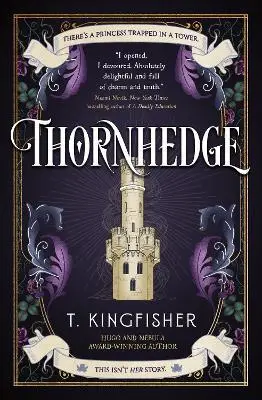
Now this is where our definition of a curse becomes particularly interesting. Thornhedge is a Sleeping Beauty retelling, but T. Kingfisher takes the familiar story and turns it completely on its head.
In the traditional version, an innocent princess is cursed by an evil fairy, falls into an enchanted sleep and waits for a prince to rescue her. Simple enough.
Except what if the princess isn’t innocent? And what if the fairy who puts her to sleep isn’t evil?
In Thornhedge, Toadling is a changeling who places a dangerous princess under an enchanted sleep. But rather than acting out of jealousy, spite or some petty disagreement over a christening invitation, she’s trying to protect people.
Because the princess is cruel. And waking her up would be a terrible idea.
For centuries, Toadling guards the tower and its surrounding brambles, doing everything she can to prevent someone from breaking the enchantment. In the meantime, history is busy rewriting itself around Toadling and the princess’s tower.
I absolutely love this reversal. The curse hasn’t changed its fundamental nature. Someone has been placed into a magical sleep against their will, and the condition persists until it’s broken. But the moral context is completely different.
In the original fairy tale, breaking the curse is an unquestionably heroic act. The princess is a victim, the fairy is a villain and the prince is rewarded for rescuing her. In Thornhedge, breaking the curse could endanger innocent people. Suddenly, the traditional fairy-tale ending isn’t necessarily a happy one.
And I think that’s what makes this such a clever retelling. Kingfisher doesn’t simply swap the roles of hero and villain for the sake of being different. She asks us to reconsider why we automatically assume that breaking an enchantment is the right thing to do.
Sometimes the person behind the curse is the one trying to protect everyone else. And sometimes the beautiful princess should probably stay asleep. Sorry, Your Highness.
A Court of Thorns and Roses — Sarah J. Maas
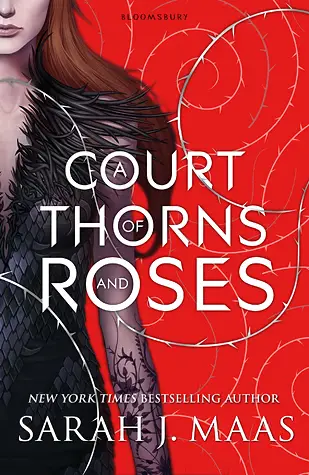
If Thornhedge demonstrates why a curse might need to remain intact, A Court of Thorns and Roses gives us a much more traditional example of why one desperately needs to be broken.
In the first book of Sarah J. Maas’s ACOTAR series, Amarantha has placed a curse on Tamlin and the Spring Court. The curse traps members of the court behind magical masks and restricts their powers. But, as with many fairy-tale curses, there’s a way to break it.
Unfortunately, the conditions are so specific that they might as well have been written by someone who was deliberately trying to make them impossible. Which, of course, they were.
Tamlin needs a human woman who hates faeries to fall in love with him. And naturally, he can’t simply explain the situation. Because that would make things far too straightforward.
What I find interesting about this curse is how much of the plot it controls before Feyre even understands that it exists. The curse influences Tamlin’s behaviour, the circumstances surrounding Feyre’s arrival and the decisions made by people who know considerably more than she does.
And that creates an interesting problem.
Because while the curse is undeniably cruel, the attempts to break it raise questions about manipulation, consent and how much information someone needs before they can make a meaningful choice. If you’re engineering circumstances so that someone will fall in love with you, how much of that relationship is genuinely their decision?
Of course, this is fantasy romance, so we also have dangerous faeries, mysterious masks, enormous amounts of tension and people being spectacularly bad at communicating.
But underneath the romance is a fairly traditional fairy-tale structure: a powerful villain imposes an enchantment, an apparently impossible condition must be fulfilled and the fate of an entire court depends on whether someone can break the curse.
Unlike Thornhedge, this is one enchantment that absolutely needs to go. Although I do think the Spring Court could have benefited from a few honest conversations along the way.
The Winged Game — Sophie Kim

I don’t want to get into spoilers for The Winged Game because it only came out this year, so you’re just going to have to trust me. There are curses in this story.
Because when you’re already dealing with a dangerous magical sport, fractured relationships, professional rivalries and a possible murder, what you really need is a supernatural complication.
The Winged Game follows Taissa Cho, a former Carriwitchet star whose career was destroyed after a disastrous incident. When she’s offered an opportunity to return to the sport she loves, there’s a rather significant catch: she has to work with Kion, her former rival and the person she holds responsible for her downfall.
Yes, that’s right. A sports romantasy. I cannot adequately express how delighted I am that this genre combination exists.
But while the central romance is an enemies-to-lovers story, there’s considerably more happening around it.
The team has murders to solve… I mean curses to unravel, very few clues to work with and an increasingly complicated collection of problems that can’t simply be solved by winning their next match.
The curses aren’t isolated magical inconveniences that the characters can deal with before returning to the important business of falling in love. They’re part of a much larger mystery, forcing the characters to investigate what’s happening while navigating their existing conflicts.
What I especially liked was that all these different elements could have made the book feel ridiculously overcrowded. Instead, they worked together.
The curses provide mystery and danger, the sporting competition gives the characters a reason to keep working together and the romance develops alongside everything else.
Also, there’s Cronus, Taissa’s terrifying cockatrice. Who is friend-shaped. Under very specific circumstances. And preferably from a safe distance.
White Cat — Holly Black

And finally, we’re leaving traditional fairy-tale curses behind entirely. Because in White Cat, curses aren’t rare magical punishments handed down by angry witches. They’re an entire system of magic.
In Holly Black’s Curse Workers series, certain people possess the ability to manipulate others through skin-to-skin contact. Depending on their particular talent, they can change someone’s emotions, memories or luck. And because curse-working is illegal, many workers operate within criminal organisations. Which is a fascinating piece of worldbuilding.
Imagine living in a society where a handshake could fundamentally alter your memories or emotions. Where you can’t necessarily trust your own recollection of events because someone might have changed them. Suddenly, wearing gloves becomes considerably more important than making a fashion statement.
The story follows Cassel Sharpe, who comes from a family of curse workers but believes he doesn’t possess any magical abilities himself. He’s also haunted by the memory of killing his best friend, Lila.
And when he begins sleepwalking and dreaming about a mysterious white cat, he starts questioning what he knows about his family and his past.
I reviewed this book back in 2019, and one of the things I particularly enjoyed was the way Holly Black constructed the magic system.
Every benefit of curse-working comes with an equivalent negative consequence.
I love that. Magic with limitations and costs is infinitely more interesting to me than magic that conveniently solves every problem whenever the plot requires it. It means characters have to consider the consequences of using their abilities, even when those abilities might give them an enormous advantage.
I also appreciated how much thought Black had put into the wider society. Curse-working doesn’t exist in isolation. It has affected laws, criminal activity, family relationships and the way people interact with one another.
Because the real horror of White Cat isn’t necessarily that people can manipulate someone else’s memories or emotions. It’s what happens when the people who are supposed to love and protect you are willing to use those abilities against you.
And that’s a much more disturbing kind of curse than being transformed into a frog. Although, to be fair, I probably wouldn’t enjoy that either.
Is a curse always a bad thing?
When I started thinking about this week’s prompt, I assumed we’d end up with five examples of unfortunate characters suffering under terrible enchantments.
And while there’s certainly plenty of suffering in these books, what surprised me was how differently each author uses the idea of a curse.
- For Princess Anya in Frogkisser!, curses create problems that she has the power to solve.
- Thornhedge, meanwhile, turns that expectation on its head, using a curse to protect innocent people from someone dangerous.
- Amarantha’s curse in A Court of Thorns and Roses is a tool of oppression, controlling an entire court and shaping the choices available to its inhabitants.
- The characters in The Winged Game have mysteries to unravel alongside their other conflicts, with curses complicating an already dangerous situation.
- And then there’s White Cat, where curse-working is so deeply embedded in society that it’s fundamentally changed how people live, work and trust one another.
Which brings me back to the question I asked at the beginning.
If a curse protects innocent people, is it still a bad thing?
I think the answer depends on what we believe makes something a curse in the first place. Is it the intention of the person casting it? The consequences for the person experiencing it? Or simply the fact that a magical condition has been imposed on someone without their consent?
Because if we define curses entirely by malicious intent, Thornhedge becomes difficult to categorise. And if we define them entirely by negative consequences, what do we do with magic that benefits one person while harming another?
Perhaps the most interesting curses are the ones that don’t fit neatly into good and evil.
Although I still think turning someone into a frog because they’ve annoyed you is probably a little excessive. Probably.
PARTICIPANTS
What are your favourite books with curses?
Do you prefer traditional fairy-tale enchantments, complicated magical bargains or stories that challenge whether a curse is necessarily evil?
And have you read any books where breaking the curse actually makes everything worse?
Let me know in the comments!

meeghan
Hi!! I'm Meeghan 😊 I like books (surprise). I also like games (board, video and D&D), baking (mostly cakes) and travel. I live in Canberra, Australia with Husband and 3 black rescue kitties.


5 Comments
Janette
I think that my all time favourite book with a curse has to be The Curse of Chalion. It’s such an all-encompassing curse on the royal family and twists all of their actions so that they fail. I really love the way the author shows how this then affects the people around the actual rulers and the country as a whole
meeghan
I just looked it up and it sounds fascinating!! Do you need to read all of the novellas and short stories?
Janette
No. It’s a perfect stand alone novel. Everything else came after I think
Kris ✨
Ahh that’s interresting!
The one book Ive read that fit the bill is the forgotten memories of Vera Glass- a girl who cursed another girl because she didn’t wanted to feel alone & left out.
Ultimately, i’d say it depend on the intend. In the end of the book they realize what happened and the girl who placed it ignored how bad it would actually be, and reverse it.
meeghan
Well, that sounds like not a great ending in terms of consequences…!!